


 Short-term rental
Daina Kantāne, Head of the Leasing Department at car rental and full-service leasing company Avis, admits that relatively high fuel prices are to be expected in the future.
But by changing your driving habits and reducing your fuel consumption, you can make significant savings. That’s why we’ve put together 7 useful tips to make fuel-efficient driving part of your everyday life.
If you follow the principles of economical driving, the savings may not be immediately apparent in the first few days, but over a month or a year they can be surprising. For example, for an average driver who drives 20,000 km a year, even a 0.5 litre reduction per 100 km can result in fuel savings of more than 100 litres per year. At current prices, this means saving tens of euros every month.
How to save fuel when driving?
There are many different tips to help you reduce your fuel consumption – driving efficiently can really help you save money. One of the main recommendations is to choose the right car for your needs – if you’re moving around town, a small, economical car is likely to be the best choice.
Most drivers do not realise how important driving manners are in their daily driving. Even small changes in habits can significantly reduce fuel consumption. For example, running the engine while stationary for long periods (e.g. waiting for a child at school or taking a phone break) can lead to unnecessary costs. Similarly, driving in too low a gear when the engine is revving up consumes more fuel than necessary.
It is also advisable to consider the type of engine. In the past, the prevailing view was that a diesel engine was more economical. In some ways, driving a diesel is not a myth, but only if the car is new, in good condition and driven for relatively long distances.
Here are 7 more useful tips to make your driving more economical.
1. Don’t put off refuelling until the last minute
Why is this important? If you regularly fill up only when the pump symbol is already flashing, you will probably have no choice but to drive to the nearest petrol station. You may have to accept a higher price – and it will no longer be economical driving.
If you fill up on time, you can both use loyalty cards from a particular petrol station network to save money and compare prices. The popular Waze app is a great way to compare prices. As a reminder, it is important to fill up with quality fuel that meets EU standards.
2. Put Start-Stop into action
When we drive in the city, we spend a lot of time at traffic lights and in traffic jams – and that means parking with the engine running. To save fuel, use the Start-Stop system found in many modern cars – it automatically switches off the engine when you come to a stop, reducing fuel consumption. In this sense, you could argue that economical driving is already “built-in” in many cars – you just have to use it.
Golden rule: If you plan to be stationary for more than 30 seconds, it’s a good idea to switch off the engine.
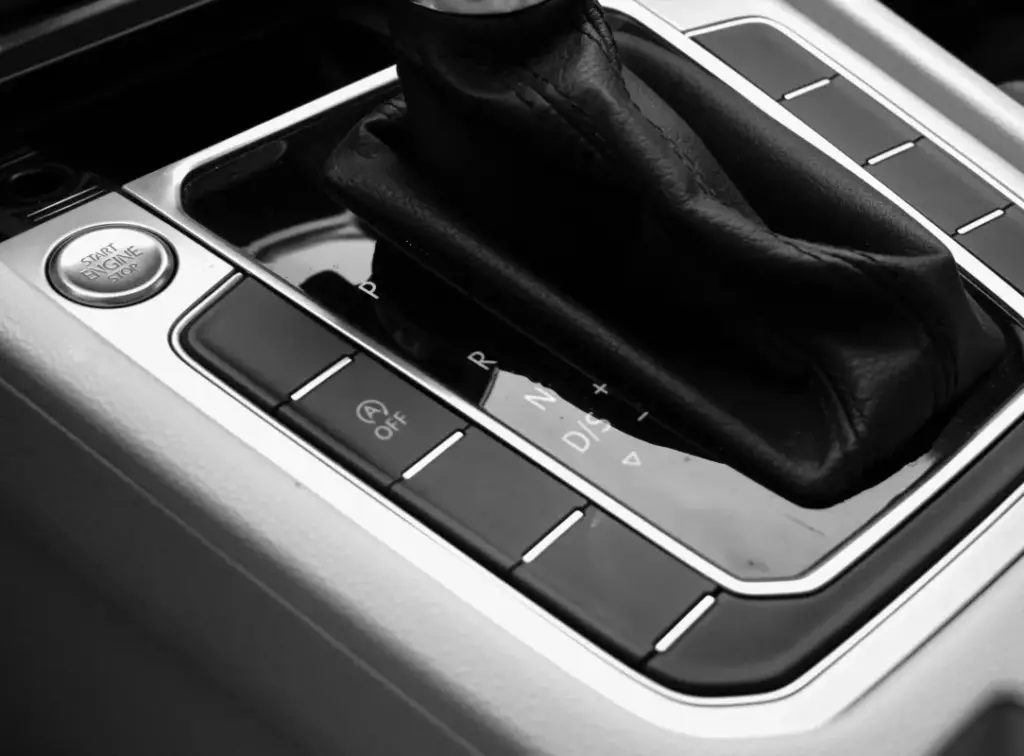
The Start/Stop myth system
Many drivers disable the automatic defrost system for fear of damaging the starter. 2026. In 2010, these fears are unfounded. Modern cars (especially rental cars) have reinforced starters for up to 500 000 cycles, or (in the case of hybrids) use an electric motor instead of a starter that cannot “wear out”.
3. Learn to drive more smoothly
Accelerating and braking at the same speed use significantly more fuel, so it is advisable to learn to drive more smoothly. The most important thing is to choose the right speed – this will reduce the need to accelerate and brake and make driving safer.
In addition, smooth driving makes more efficient use of inertia – for example, easing off the accelerator on downhills or approaching a junction can reduce braking and fuel consumption. It also means you can monitor the situation on the road in time – when you see a red light or an obstacle ahead, you can release the accelerator in time, allowing the car to slow smoothly without the need for harder braking.
On-board computer gauges that show average and current fuel consumption can also help some drivers – giving instant feedback on how different driving habits affect consumption.
This is not only more economical, but also more comfortable for passengers and slows down the wear and tear on the car’s mechanical parts, such as brake pads and clutches.
4. Keep an eye on tyre pressures and choose economy tyres
Economical driving is not just about how we drive, but also about the tyres we use. Higher tyres have lower rolling resistance and therefore lower fuel consumption. It is also important to check tyre pressure regularly, especially before longer journeys – under-inflation increases fuel consumption. So economical driving is also about the right tyres.
5. carry out regular and timely car maintenance
There is no doubt that the condition of a car affects its fuel consumption. Care must be taken to choose a quality engine oil that is suitable for your car. If you suspect engine damage, if your fuel filters or spark plugs are worn out, visit a reliable garage early.
To ensure maximum fuel efficiency, it is important not only to change your driving habits, but also to check your car regularly. A clean air filter, properly adjusted ignition and quality engine oil ensure that your engine runs optimally and uses less fuel.
In addition, carrying too much weight is another common factor that increases fuel consumption. Every extra 50 kg can increase consumption by around 1-2%. It is therefore advisable to review the boot and roof rack – are there any unnecessary items that are not needed on a daily basis?
6. How to drive a hybrid economically?
If you’ve switched from a conventional diesel or petrol car to a modern hybrid, your old driving habits may be preventing you from achieving the low consumption you were promised. A hybrid requires a slightly different approach to get the most out of electric power.
Braking on time and fluidly (Regeneration): hybrids’ greatest strength is their ability to convert braking energy into electricity. If you brake hard at the last minute, conventional braking kicks in and the energy goes into the heat. If you start braking early and lightly, the car charges the battery, which you can use later to drive for free.
“Pulse and Glide method: the hybrid does not like to “drag” as it picks up speed. It is more effective to decisively (but not aggressively) reach the desired speed by engaging the petrol engine and then fully letting off the throttle. This “disengages” the petrol engine. Then gently press the accelerator to maintain speed on electricity only(EV mode).
Do not use “N” (Neutral) gear: rolling the hybrid in Neutral gear disables the hybrid system and does not charge the battery. Always leave in “D” or use “B” (Brake) mode on hills.
7. Use the “Eco” driving mode
It’s the easiest way to save money, but a surprising number of drivers don’t know about it or forget to activate it. Most modern cars have different DriveModes.
Where to look for it? It can be a physical button next to the gear knob (often marked “Eco”, “Green” or with a tree leaf symbol), but in many cars you have to look for it in the settings on the multimedia screen under “Car Settings” or “Driving Profiles”.
Eco mode makes the car “calmer” – even if you accidentally press the accelerator harder, the electronics smooth it out, preventing the engine from consuming too much fuel. In addition, Eco mode also reduces the power of the air conditioning slightly (which you probably won’t even feel), but it does take a lot of the strain off the engine.
Seasonal impact on fuel economy
The seasons also have a significant impact on fuel consumption. In winter, the engine works less efficiently, especially before it warms up. In cold weather, additional electrical loads such as window heating and seat heating are also used, increasing the load on the engine and therefore fuel consumption.
To mitigate these effects, it is recommended to:
- Do not warm up the engine by idling for long periods. 30-60 seconds is sufficient, after which it is advisable to start driving in relaxed mode.
- Choose a winter-appropriate engine oil with a lower viscosity, which allows the engine to run more easily.
- Regularly clear snow and ice from the car body – excess weight and air resistance affect consumption more than you think.
In summer, air conditioning is the main contributor to increased fuel consumption. If possible, choose natural ventilation or open the windows when driving at low speed in the city. On the highway (above ~70 km/h), on the other hand, open windows create air resistance, in which case an air conditioner may be a more economical solution.
Avis blog
Are modern electric cars getting too complicated? Technologies that help and annoy
Modern electric cars offer high efficiency and safety, but their sophisticated technology and user interfaces [...]
Avis blog
Hybrid cars for business in 2026: How to optimise fleet and costs with full-service leasing
2026. The year marks a major turning point in corporate mobility, where sustainability is often [...]
Avis blog
Are electric cars viable in Latvia in 2026?
Is 2026 the right time to switch to electric mobility? Energy efficiency and sustainability are [...]
Avis blog
Otepää with the electric Cupra Born – Estonia’s sports capital that surprises
Otepää with the electric Cupra Born – Estonia’s sports capital that surprises Although April has [...]
Avis blog
Why is it more beneficial today to have an employer car as an advantage through long-term lease rather than purchase?
Have you ever wondered how much time your team spends dealing with servicing, insurance policies [...]
Avis blog
Economical driving – 7 useful tips
Daina Kantāne, Head of the Leasing Department at car rental and full-service leasing company Avis, [...]
Avis blog
7 games when riding in the car with children
Summer days and the long school holidays are the perfect time to go on exciting [...]
Avis blog
There is a map of black spots – maybe a road sign?
Latvija bija trešā valsts Eiropas Savienībā pēc satiksmes negadījumos bojā gājušo skaita 2023. gadā. 2024. [...]
Avis blog
Campervan rental – how to choose and what to consider?
Have you ever dreamed of travelling without any firm plans, staying in picturesque places and [...]